Emergency departments are designed to make rapid decisions, yet many important decisions depend on laboratory results. Even when an assay itself is relatively fast, total turnaround time can increase because specimens must be collected, labeled, transported, received, queued, analyzed, verified, and then communicated back to the clinical team.
Point-of-care testing can shorten part of this pathway by moving selected diagnostic tests closer to the patient. Its value is therefore not limited to analyzer speed; it lies in reducing avoidable steps between specimen collection and clinical action.
Where Does Diagnostic Delay Occur?
A traditional laboratory pathway often looks like this:
Patient assessment → sample collection → transportation → laboratory reception → preparation → analyzer queue → testing → result validation → clinical review
Several minutes may be added at each stage.
During periods of high emergency-department demand, those small delays can accumulate.
POCT changes this structure by moving selected diagnostic procedures closer to the care setting.
What Is Point-of-Care Testing?
Point-of-care testing refers to diagnostic testing performed near the location where patient care is delivered instead of exclusively within a central laboratory.
It can be used in:
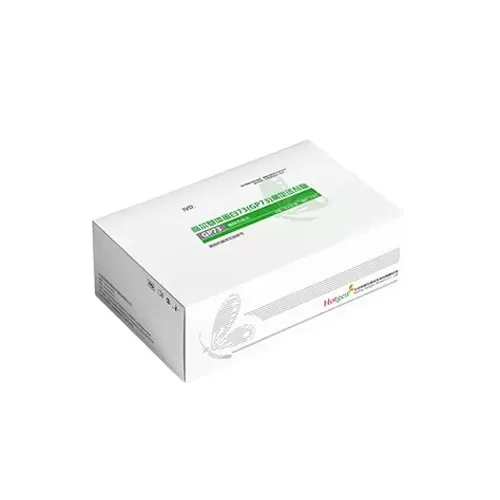
Hotgen's UPT device, for example, is designed for quantitative testing based on up-converting phosphor technology.
How Can POCT Reduce Emergency Department Waiting?
1. Reducing Sample Transportation
Central laboratory testing requires physical transport of specimens.
If an appropriate test can be performed near the emergency patient, part of this transportation time can be removed.
2. Reducing Central Laboratory Queues
Emergency samples often share laboratory capacity with routine hospital samples.
Moving suitable tests closer to the patient can help reduce unnecessary central laboratory workload while preserving laboratory resources for more complex testing.
3. Making Results Available Earlier
Earlier result availability can support faster decisions regarding:
additional testing;
treatment pathways;
discharge;
admission;
patient prioritization.
The relevant measure is therefore not only analytical time but also specimen-to-result time.
Hotgen UPT2800 Key Specifications
Hotgen's UPT2800 provides an example of a compact quantitative testing platform.
| Parameter | UPT2800 |
|---|
| Assay Method | UPT-based lateral flow assay |
| Result Type | Quantitative |
| Analyzer Reading Speed | Approx. 20 seconds |
| Display | 8-inch touchscreen |
| Result Storage | 10,000 results |
| Printer | Internal thermal printer |
| Dimensions | 355 × 315 × 270 mm |
| Weight | 5.6 kg |
| Connectivity | LIS/HIS |
| Power Supply | AC 100–240 V, 50–60 Hz |
When hospitals evaluate POCT equipment, size, connectivity, data storage, and operating workflow can be just as important as analytical speed.
Which Tests Are Most Suitable for POCT?
POCT provides the greatest value when receiving a result earlier can change the next clinical decision.
Potential categories may include:
A hotgen UPT kit system should therefore be evaluated according to both the available test menu and the hospital's actual clinical demand.
There is limited value in decentralizing a test if receiving the result earlier does not affect care.
Why Does Quantitative POCT Matter?
Some rapid tests provide qualitative positive or negative results.
A quantitative platform adds numerical measurement, which may be useful for biomarkers where clinicians need to evaluate concentration rather than simply determine whether a target is present.
For this reason, laboratories evaluating a POCT immunoassay analyzer should consider:
The instrument should be selected according to the complete clinical use case rather than speed alone.
Does POCT Replace the Central Laboratory?
No.
The two environments have different strengths.
Central Laboratory
Best suited to:
high-volume testing;
broader assay menus;
specialized tests;
automated workflows;
complex quality control.
POCT
Best suited to:
selected time-sensitive tests;
near-patient testing;
reduced sample transport;
decentralized clinical environments.
The useful question is therefore not whether one should replace the other.
It is which tests should remain centralized and which provide enough clinical benefit to move closer to the patient.
What Should Hospitals Evaluate Before Implementing POCT?
Clinical Need
Hospitals should identify which decisions are currently delayed by laboratory turnaround time.
Test Volume
Low-volume and high-volume tests may require very different workflows.
Connectivity
Result transmission and traceability should be considered during implementation.
The UPT2800 supports LIS/HIS connectivity, allowing results to be integrated into laboratory or hospital information workflows.
Operator Training
Staff need training in:
specimen collection;
analyzer operation;
quality control;
troubleshooting;
documentation.
Quality Management
POCT remains diagnostic testing and should operate within an appropriate quality-management framework.
Total Cost
Hospitals should consider:
instrument cost;
reagents;
consumables;
QC materials;
maintenance;
staff time;
training.
The lowest instrument price does not necessarily produce the lowest cost per reportable result.
Can POCT Improve Overall Patient Flow?
Potentially, but its impact depends on where the real bottleneck occurs.
Emergency department waiting time can also be influenced by:
bed availability;
medical imaging;
physician availability;
specialist consultation;
admission procedures.
POCT cannot solve all these constraints.
However, when laboratory turnaround time is preventing patients from progressing to the next stage, faster testing can make a measurable difference.
Hospitals considering broader Hotgen UPT products should therefore monitor operational outcomes after implementation rather than evaluating the system only through technical specifications.
How Should Hospitals Measure POCT Success?
Useful indicators include:
specimen-to-result time;
result-to-decision time;
emergency length of stay;
repeat testing rate;
central laboratory workload;
operator error rate;
POCT utilization;
cost per reportable result.
This helps determine whether the system is solving the clinical workflow problem it was purchased to address.
Conclusion
Point-of-care testing can reduce part of the diagnostic waiting process by bringing selected tests closer to emergency patients and removing some specimen transportation and laboratory queuing steps.
The strongest POCT strategy is selective. Hospitals should identify tests where faster results genuinely influence patient flow, maintain appropriate quality management, and integrate decentralized testing with the central laboratory.
FAQs About Point-of-Care Testing
1. What is point-of-care testing in an emergency department?
Point-of-care testing refers to diagnostic testing performed near the patient rather than exclusively in the central laboratory, allowing selected results to become available closer to the time and place of care.
2. How can POCT reduce emergency department waiting time?
POCT can reduce specimen transportation, laboratory queuing, and result-reporting delays for selected assays, which may allow clinicians to make decisions earlier.
3. Can POCT replace a central hospital laboratory?
No. POCT is most useful for selected time-sensitive tests, while central laboratories remain essential for high-volume, specialized, and complex diagnostic procedures.
4. What should hospitals consider before introducing POCT?
Hospitals should evaluate the clinical use case, test menu, turnaround time, quality control, operator training, connectivity, test volume, maintenance requirements, and total operating cost.
 English
 français
 Deutsch
 Español
 ไทย
ไทย русский
 português
 العربية
 Indonesia